What happens when our machines can make the machines
that make everything we need?
Follow the loops from a robot’s hands to a city’s heartbeat.
A proposed future, told one image at a time.

Droids building droids.
A future that builds itself.
An abundance we all get to share.
What happens when our machines can make the machines
that make everything we need?
Follow the loops from a robot’s hands to a city’s heartbeat.
A proposed future, told one image at a time.
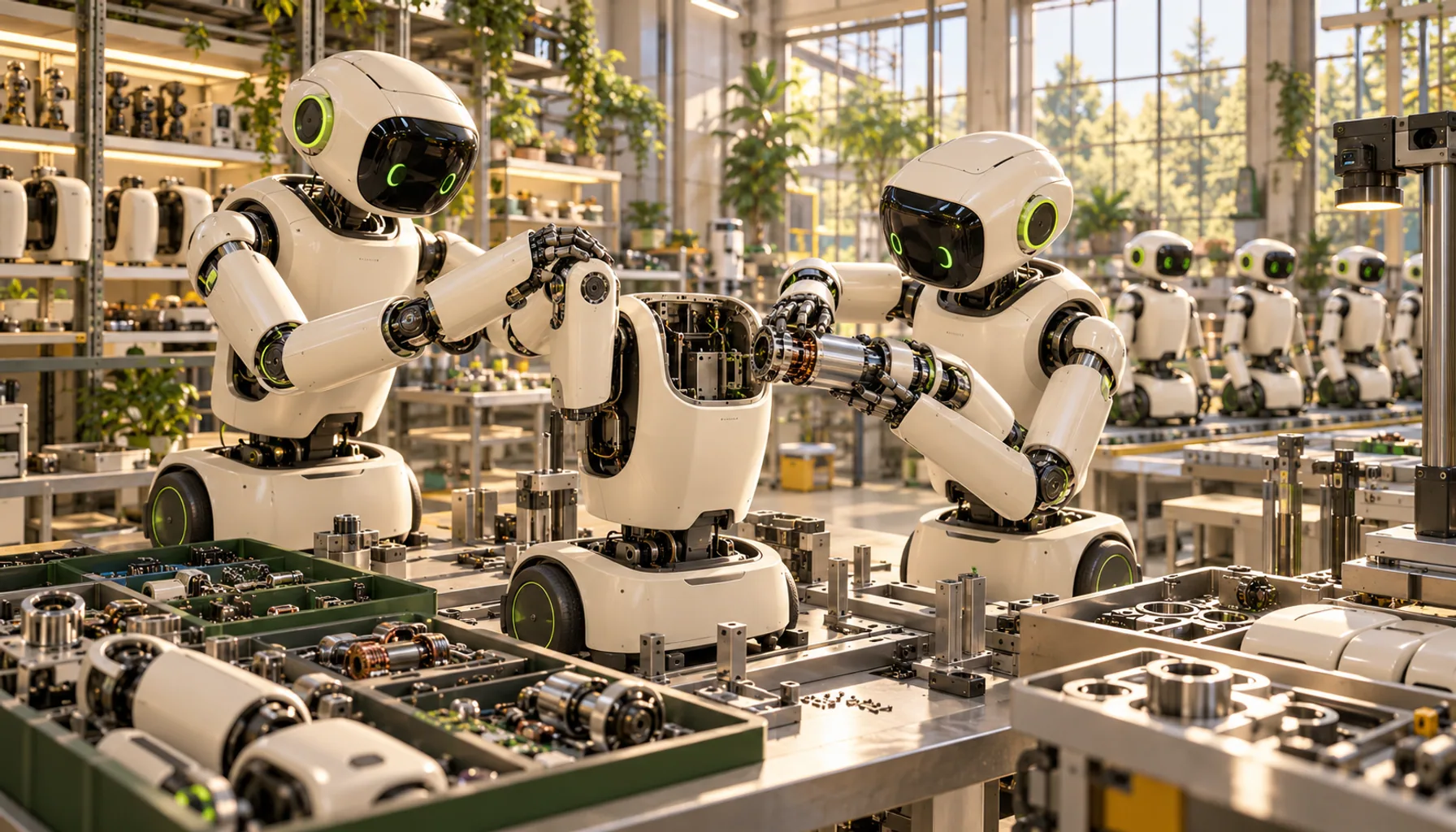
The most important thing a droid can help make is another droid.
Assembly, inspection, testing, and repair become repeatable skills. Each new machine adds the capacity to make the next. The goal is a production loop that can grow and maintain its own fleet.
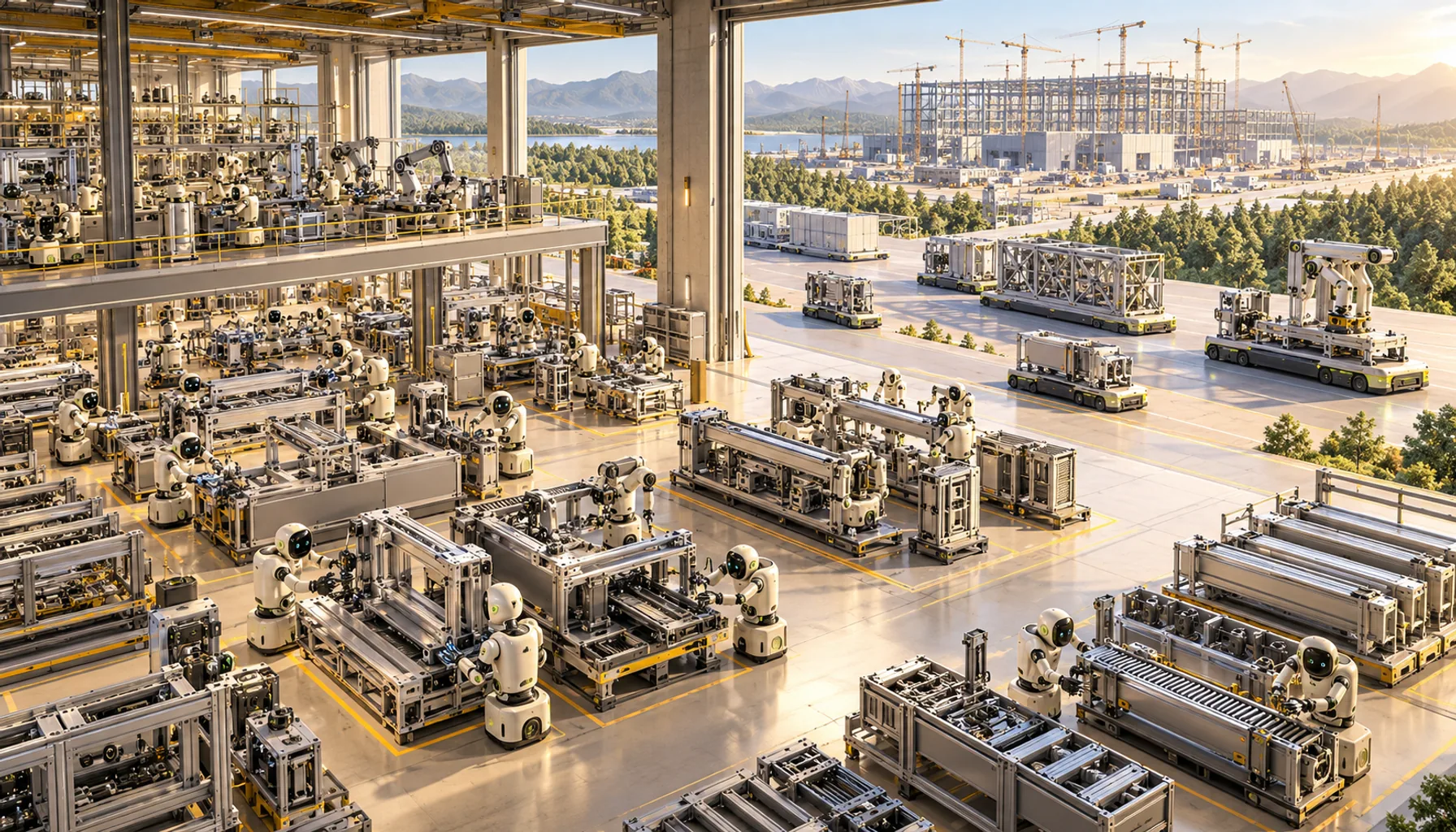
Don’t just automate the output. Automate the means of making it.
Droids manufacture tools, assemble production cells, and move equipment into new facilities. Standardized parts and open designs let a successful process be reproduced. More capacity becomes a way to create even more capacity.
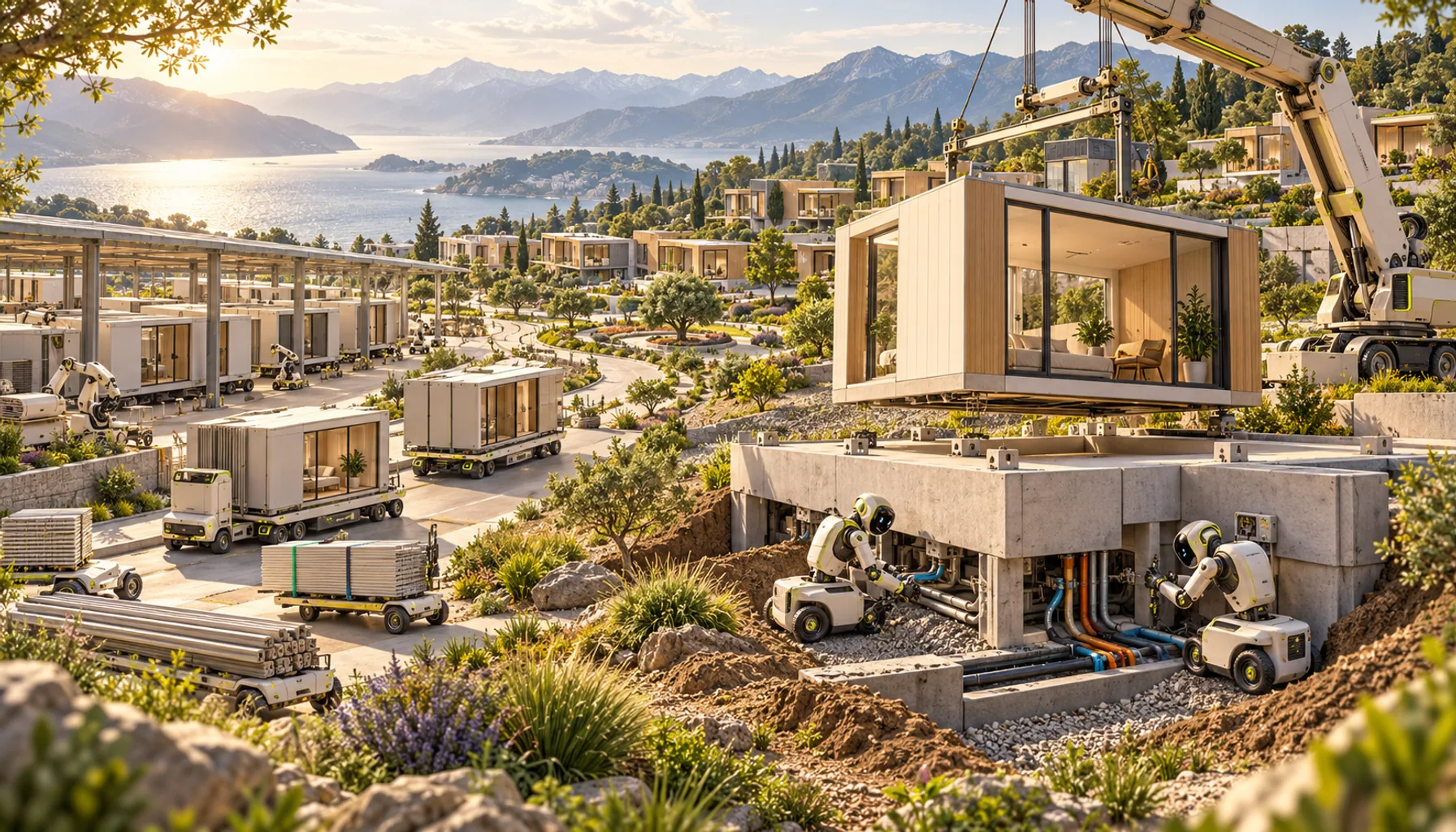
A home isn’t finished when it leaves a factory.
Autonomous transport, site preparation, placement, utility connections, and inspection complete the journey. The vision is a continuous path from raw inputs to a safe, livable home—with universal basic housing as the destination.
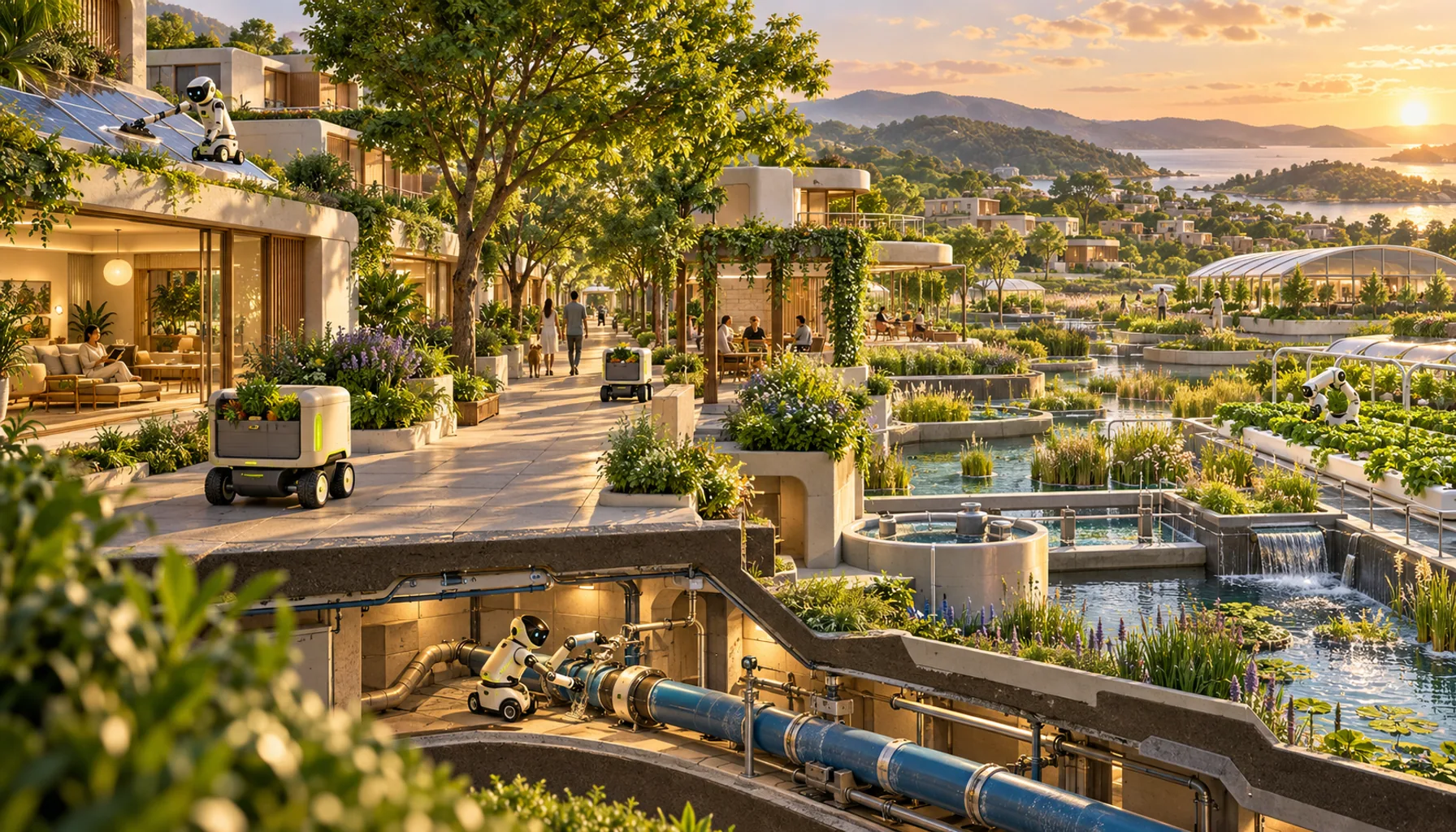
A fully automated city has to work on an ordinary Tuesday.
Food grows. Water circulates. Deliveries arrive. Roads, homes, and pipes get repaired. Droids monitor, maintain, and replace the systems that support daily life. The long-term aim: no human labor required for routine upkeep, with people retaining control of the city’s goals and rules.
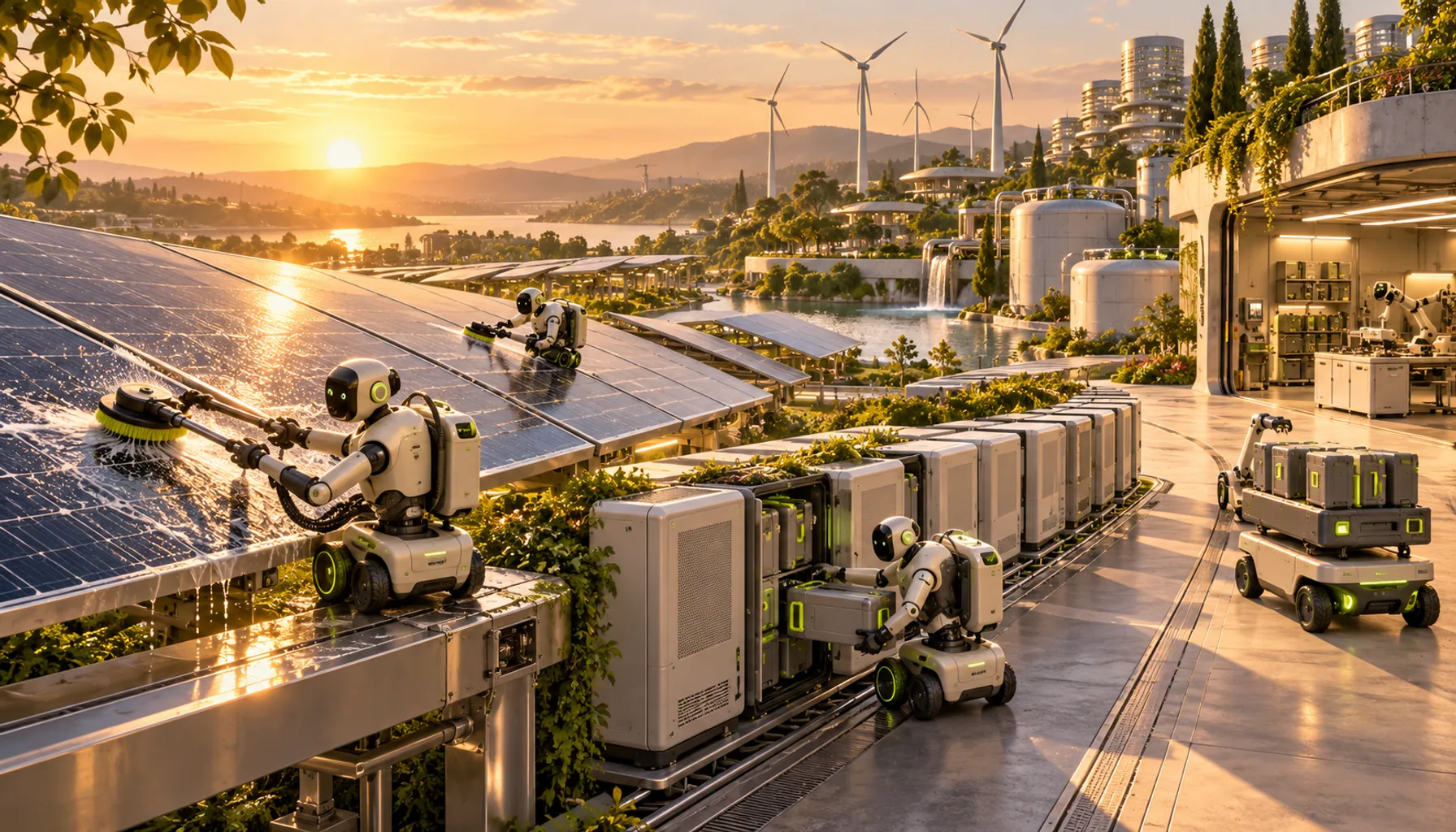
Every physical action needs energy. Abundance needs abundant clean power.
Solar, storage, and other suitable energy systems power production. Droids build, clean, repair, and renew that infrastructure. Closing this maintenance loop reduces the recurring work and expense behind every manufactured thing.
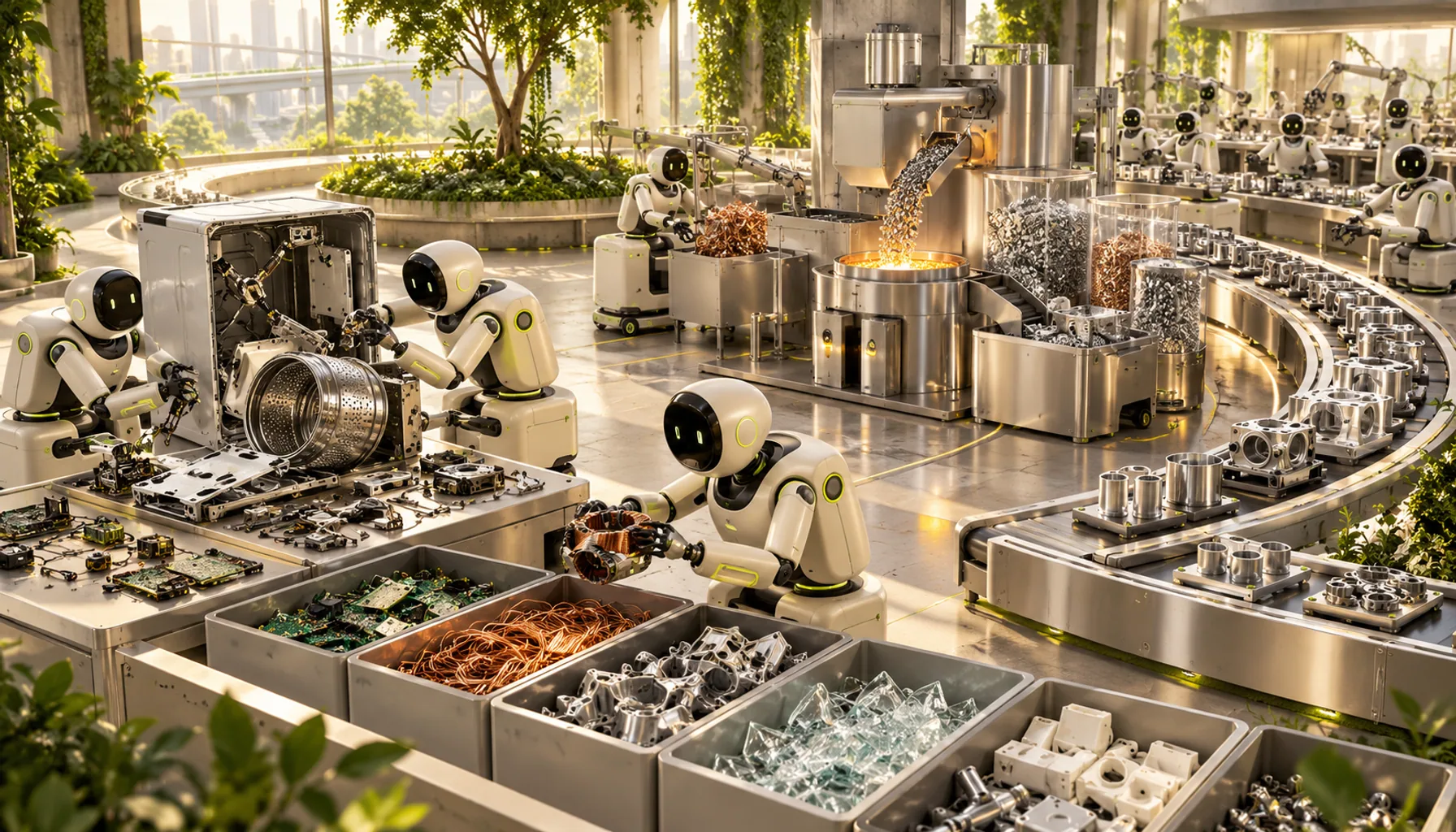
Design everything with its next life in mind.
Repair before replacing. Disassemble instead of discarding. Recover metals, glass, components, and water, then return them to production. Automated recovery makes the city a source of usable material as well as a place that consumes it.
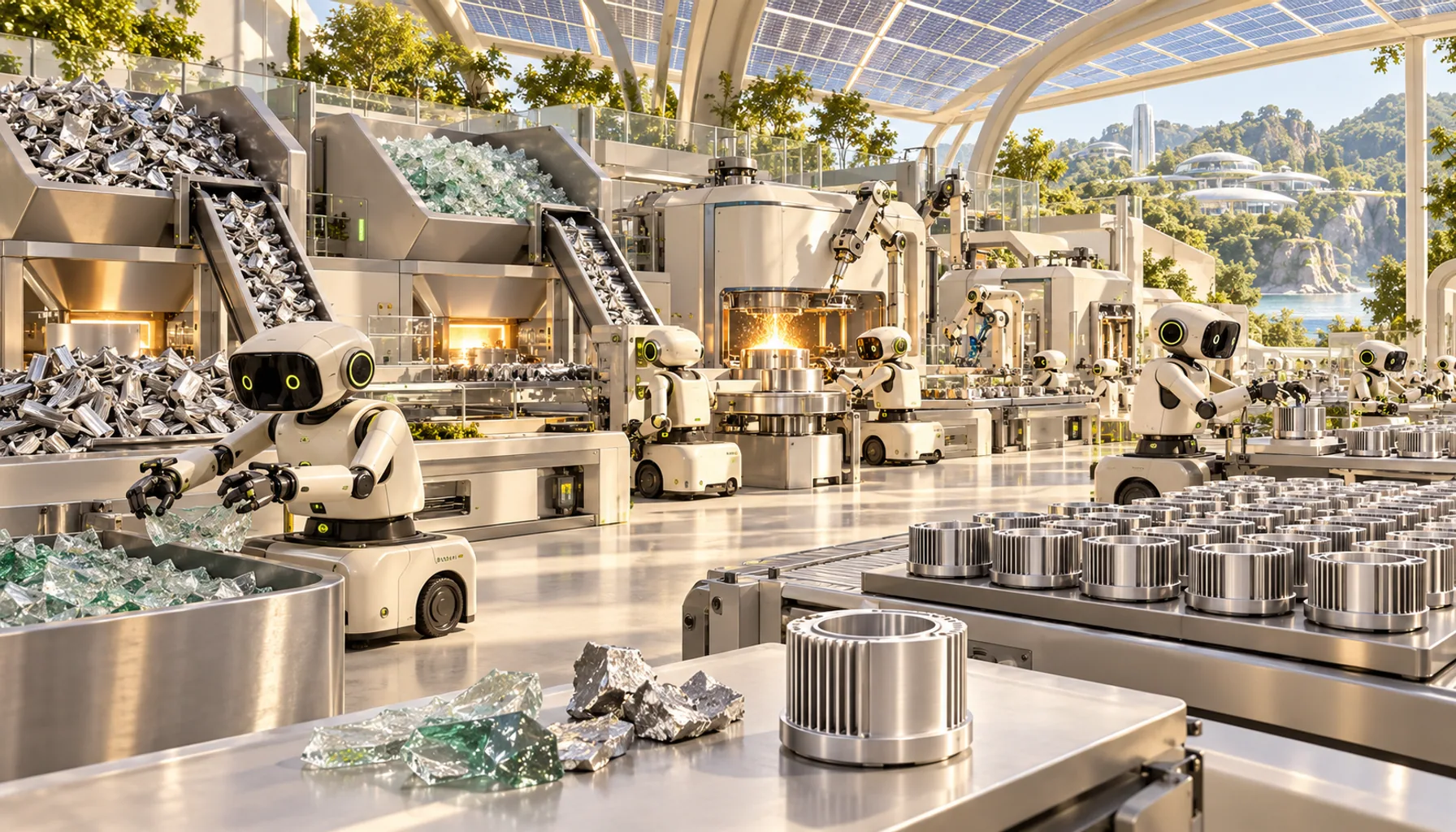
More useful output. Less new extraction, wasted energy, and repeated work.
Combine automated extraction and recovery, plentiful clean energy, durable designs, and factories that maintain their own tools. The ambition is to drive the marginal cost of producing useful goods—and supplying their processed materials—as close to zero as physical limits allow.
Automation removes repeated work. Clean power lowers energy overhead. Recovery keeps valuable matter in the loop.
If the system can provide the basics, access to the basics should be universal.
The protocol pairs autonomous production with shared access: housing, food, water, energy, and everyday goods available as a baseline. Open knowledge and accountable stewardship help turn productive capacity into a common benefit. People choose what to create, explore, and become.
A system that creates more capacity, sustains its own infrastructure, and provides the essentials as a shared baseline.
Droids make droids, tools, homes, food, and the infrastructure for more production.
The system inspects, repairs, and renews the machines and places that keep it running.
Products come apart. Materials return. Every cycle reduces waste and new extraction.
Universal access, open knowledge, and accountable human governance turn capacity into common abundance.
Housing. Food. Water. Energy. Time.
A world where living well is the baseline,
and being human is the opportunity.
This story and its AI-generated concept illustrations describe Droid’s long-term ambition, not deployed autonomous factories or cities. End-to-end autonomy, near-zero marginal material costs, and free universal provision remain goals requiring technical progress, real resources, safety validation, and deliberate choices about access and ownership.